Sunday, September 25, 2016

TOW #3- Superman and Me by Sherman Alexie


Sherman Alexie wrote, “Superman and Me,” to show how he defied Native American stereotypes by excelling in school and becoming a writer, and later helping other Native American students to do the same. This was written during a time where Native Americans struggled financially due to these stereotypes. The purpose give people hope to defy expectations to make their lives better. As a Native American who went against America’s expectations for him to be inferior to others, he establishes his credibility.Sherman uses juxtaposition, metaphors, and anaphoras in order to advocate his purpose.

His use of juxtaposition helps the readers to understand the extreme differences between Native American interaction with their own people and that with other Americans. He says, “[Native Americans] struggled with basic reading in school but could remember how to sing a few dozen powwow songs. They were monosyllabic in front of their non-Indian teachers but could tell complicated stories and jokes at the dinner table” (Sherman, para. 6). Sherman shows how Native Americans struggle within the culture of the United States, but thrive within their own culture with their own people. This shows how the average American Indian would fall to the stereotypes against them, and sets to stage for Sherman to break this cultural barrier.

He also uses metaphors in order to show this, including the motif Superman. Sherman learned how to read from Superman comic books. This character is one who, against all odds, does the impossible to save the world. In paragraph four, he describes how he pretended to be able to read by describing what was going on in the comic picture, such as when “Superman is breaking down the door.” In a way, Superman is metaphorical for Sherman’s life, as he is “breaking down the door” of society by excelling in his studies a Native American.

Lastly, Sherman uses anaphoras in order to portray his goal to break the negative societal expectations towards Native Americans. He says, “I was smart. I was arrogant. I was lucky...I was trying to save my life” (para. 7), and later concludes with, “I am smart. I am arrogant. I am lucky. I am trying to save our lives” (para. 8). By repeating the same sentence structure over and over, he stresses to the readers that he was driven to get himself out the bad financial situations in Native American reservations and is driven today to help his people do the same.

It is through these three rhetorical devices that Sherman is able to effectively accomplish his purpose.

https://i.ytimg.com/vi/-stkMRVkCIU/maxresdefault.jpg

Sunday, September 18, 2016

TOW #2: Breathometer Shark Tank Pitch- by Charles Michael Yim

This is a video of Charles Michael Yim’s Shark Tank pitch of his new product: the Breathometer. Yim describes the problem that after a night out with friends, many can find themselves having too much to drink. He asks, “And the most important question is: are you safe to drive?” The rhetorical question that he poses can resonate with many adults, including the investor board listening to his pitch, as driving after a night out with friends can can pose many safety issues. He describes this question as “the most important question” and uses a pressing tone in order to create his desired effect to make the issue of drunk driving stick in the minds of the audience. He continues and talks about a current solution to this problem. He asks, “Who would want to carry one of these bulky, old breathalyzers around?” This is another rhetorical question, which makes the audience question why someone would want this current solution. He describes the current breathalyzers as “bulky” and “old,” which helps create the effect that they are undesirable. He finally presents his solution, the Breathometer, “the world’s first smartphone breathalyzer.” He compares his innovative, modern product with the old fashioned breathalyzer. He also compares their sizes and describes his product as, “so small, it can fit in your pocket.” Through this juxtaposition between his solution to preventing drunk driving and current solutions, he is able to show that his product is superior.
Throughout the whole pitch, Yim maintains a serious, calm, and confident tone of voice, which helps to achieve his purpose: to receive an investment from the investors that will help him scale is venture. The people in the investor panel are experienced, self-made people in the business world. Yim establishes his credibility by giving a convincing pitch and being able to answer the tough questions that the investors throw at him (he even knows the numbers and stats of his business by heart). In the end, Yim was able to secure $1 million from the investors in return for thirty-percent of his company.

With thousands of people being killed from drunk driving accidents annually, Yim truly believes in his cause to offer an easy and simple way to solve this problem. Overall, through his strong pitch, including the use of rhetorical questions, juxtaposition, and a confident tone, he is able to achieve success.

https://www.youtube.com/watch?v=rx8I703K2RI

Sunday, September 11, 2016

Corn-pone Opinions by Mark Twain


Mark Twain is one of the most well renowned writers in American history. He was able to gain wide acclaim from the people of his time and even of today with his literature, including The Adventures of Tom Sawyer and the Adventures of Huckleberry Finn. Today, he is known as “The Father of American Literature.”

“Corn-pone Opinions” is about the human need of others’ approval in order to have self-approval. He claims that people never come up with their own unique ideas or opinions, and instead, they conform to the ideas and opinions of others in order to fit in. This piece was written in 1901, a time when racism was wide-spread in the south. Growing up in Missouri and living through slavery, Twain was able to see first-hand the terrible things that happened to African-American people. The reason these ideas were able to spread and be maintained was because of this idea of conforming to public opinion. Based on this theory, it would be rare that people would step up against slavery and racism in the south since most people would just accept the ideals of a society at that time. Twain is aiming this passage to the American people, especially those of the south, who supported slavery, racism, and other ideals that hurt people but are caused by others conforming to them. His purpose is to “expose” human nature, which prevents people from coming up with unique, independent ideas, and to express that it is important to come up with their own.

To achieve this purpose, Twain uses many tools and devices. Firstly, he opens up the passage by using an anecdote from his childhood that showcases his rebellious, non-conforming nature. The anecdote depicted when he used to watch an African American male give speeches about conformity, regarding him as his friend. Twain says, “I had a friend whose society was very dear to me because I was forbidden by my mother to partake of it” (1). Instead of conforming to the ideals of racism, Twain created his own viewpoints. This sentence almost seems paradoxical since it does not make sense to have a forbidden friend. This also introduces humor into the passage.

Another device that Twain uses is repetition and anaphora. He says things such as, “We know why Catholics are Catholics; why Presbyterians are Presbyterians; Baptists are Baptists…” (4) and “The think with their party, not independently; they read its literature, but not that of the other side; they arrive at convictions, but they are drawn from a partial view…” (5). This use of repetition and anaphora helps to drill the idea of conforming into the readers’ minds and allows them to understand the central ideas better.

Overall, I believe that Twain expresses his ideas clearly and effectively since he is able to give many examples to support his claim that it is human nature to conform to public opinion and not have independent ideas.

Conforming to The Styles of Others
(http://www.heathwoodpress.com/wp-content/uploads/2014/01/Conformity2-612x520.jpg)


Wednesday, September 7, 2016

Independent Reading Book for Marking Period 1 (Intro)

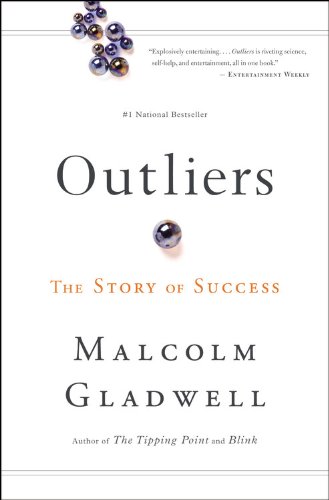
This marking period, I will be reading Outliers: The Story of Success by Malcolm Gladwell. This book discusses the factors that lead to high levels of success. I chose this because I believe that this book can teach me some skills and qualities that I might need to become a successful entrepreneur and run a successful company, something that I aspire to do.


Outliers Book Cover