Sunday, March 26, 2017

TOW #24: IRB- "Think Like a Freak," by Steven D. Levitt and Stephen J. Dubner


In Think Like a Freak, Steven D. Levitt and Stephen J. Dubner give many key points important to be successful in life by discussing how to rework the way people think. They believe that the best way of thinking is both rational and creative, and that the most successful people think this way. By using expert testimony and deductive reasoning, these authors are able to push their readers to truly “think like a freak.”

Throughout the book, Levitt and Dubner use expert testimony in order to give concrete evidence to why their claims are correct. When talking about how people who fail usually are too confident in their future, they quote Niels Bohr, a scientist who became successful in his field with his contributions to understanding atomic structure and quantum theory, who said, “Prediction...is very difficult, especially if it’s about the future.” This supports their point that we cannot be completely certain in where we turn out as it might blind us from the present problems at hand. Levitt and Dubner are trying to push readers from being so infatuated with having a successful future and to be more involved in solving present problems. By using testimony from various relevant professionals, they are able to convince their readers better, further building up their ethos.

Levitt and Dubner also use deductive reasoning to explain what people are generally compelled to do and then to tell their readers to not conform to this status quo. For example, when talking about the importance for metacognition, they say, “The barrier to thinking like a Freak is that most people are too busy to rethink the way they think– or even spend thinking at all.” Levitt and Dubner start off by giving the major premise that most people are lazy when it comes about analyzing the effectiveness of their thinking and establishing that this leads to failure. With this reasoning, they conclude that in order to be successful, people need to be more analytical about how they think and to change how they think if needed. By using deductive reason, the authors are able to logically argue their points and tell people not to conform to what the majority does.

Overall, by using expert testimony and deductive reasoning, Levitt and Dubner are able to successfully argue that rational and creative thinking is the best way of thinking. 

(http://thinkingorganized.com/wp-content/uploads/2015/08/gear-head-blue.png)


Sunday, March 19, 2017

TOW #23: "The Progressive Case for Immigration" by The Economist


In “The Progressive Case for Immigration,” the Economist writes about how immigration can actually be economically beneficial than what many believe it to be harmful. It uses counterargument refutation, statistics, and an appeal to logos in order to convince readers to be more open to opening up their country’s borders to migrant workers.

This article is structured by bringing up a claim that an anti-immigration advocate would make and then refuting it with statistics. The Economist says, “On what grounds do immigration opponents justify obstructing this happy outcome? Some suppose it would be better for poor countries to become rich themselves.” And then it goes on explaining how this argument is invalid with facts from economists and statisticians. By structuring the article like this, readers who are against immigration can be more easily convinced about the benefits of immigration.

By using statistics, this establishes the author’s ethos. It says, “A Mexican worker can expect to earn more than 2.5 times her Mexican wage, in PPP-adjusted dollars, in America. The multiple for Haitian workers is over 10; for Yemenis it is 15.” This statistic supports the argument that the quality of life can greatly increase when foreign workers come to first world countries to work, which can help to boost the economy. By using statistics, the author becomes more credible and can easier believe the argument that the author is making.

In general, the author of this article uses a strong appeal to logos in order to logically argue his or her point. By doing this, he or she can convince the audience, who would want to know the facts on this argument, that opening up a country immigration is beneficial.

Overall, the author uses counterargument refutation, statistics, and an appeal to logos in order to convince readers to be more open to opening up their country’s borders to migrant workers. With ongoing issue on immigration today, the author could have opened up more on the cultural baggage of immigration and terrorism as this is more relevant to today.

https://imprimis.hillsdale.edu/wp-content/uploads/2015/02/Immigration.png

Sunday, March 12, 2017

TOW #22: Coatesville by John Jay Chapman, The Best American Essays of the Century


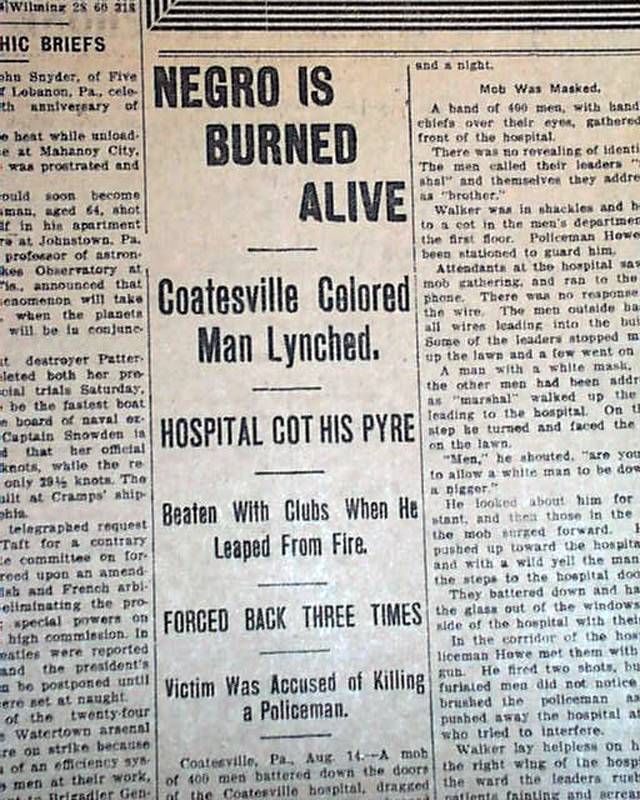
On August 1912, John Jay Chapman gave a speech commemorating the lynching of an African-American man in Coatesville, Pennsylvania. He shows his disgust towards those who watched the lynching and towards the American people for allowing these racist, heinous crimes to continue to occur. Throughout his speech, he uses asyndeton and a condescending tone in order to push listeners to move away from this hatred and towards a love for everyone regardless of race.

In his speech, Chapman uses asyndeton in order to put emphasis on the topic at hand. He says, “I say that our need is new life, and that books and resolutions will not save us, but only such disposition in our hearts and souls as will enable the new life, love, force, hope, virtue, which surround us always, to enter into us.” By not including an “and” when listing “life, love, force...” he is able to speed up the pace of his speech, overall putting emphasis on the gravity of what he is saying. Listeners can fully appreciate and be drawn in on what Chapman has to say.

Chapman also uses a condescending tone towards the American people and America in order to show his disgust towards the deep-rooted hatred that lingers on even fifty years after slavery was abolished. He says, “I saw a seldom revealed picture of the American heart and of the American nature. I seemed to be looking into the heart of the criminal – a cold thing, an awful thing.” He compares America to a criminal to show his ill-felt emotions towards the racist and heinous crimes in America. By doing this, he can instill shame into his audience and make them want to end the hatred in their country.

Overall, by using asyndeton and a condescending tone, Chapman is able to successfully argue that America needs to shift its mindset towards African Americans and plead the American people to stop letting such wicked acts of hate as lynchings plague the country. Though only two people came to listen to his speech, the transcript was published in Harper’s Weekly, extending his audience all across America.

(http://images.rarenewspapers.com/ebayimgs/11.90.2012/image054.jpg)

Sunday, March 5, 2017

TOW #21: Political Cartoon on the Two-Party System

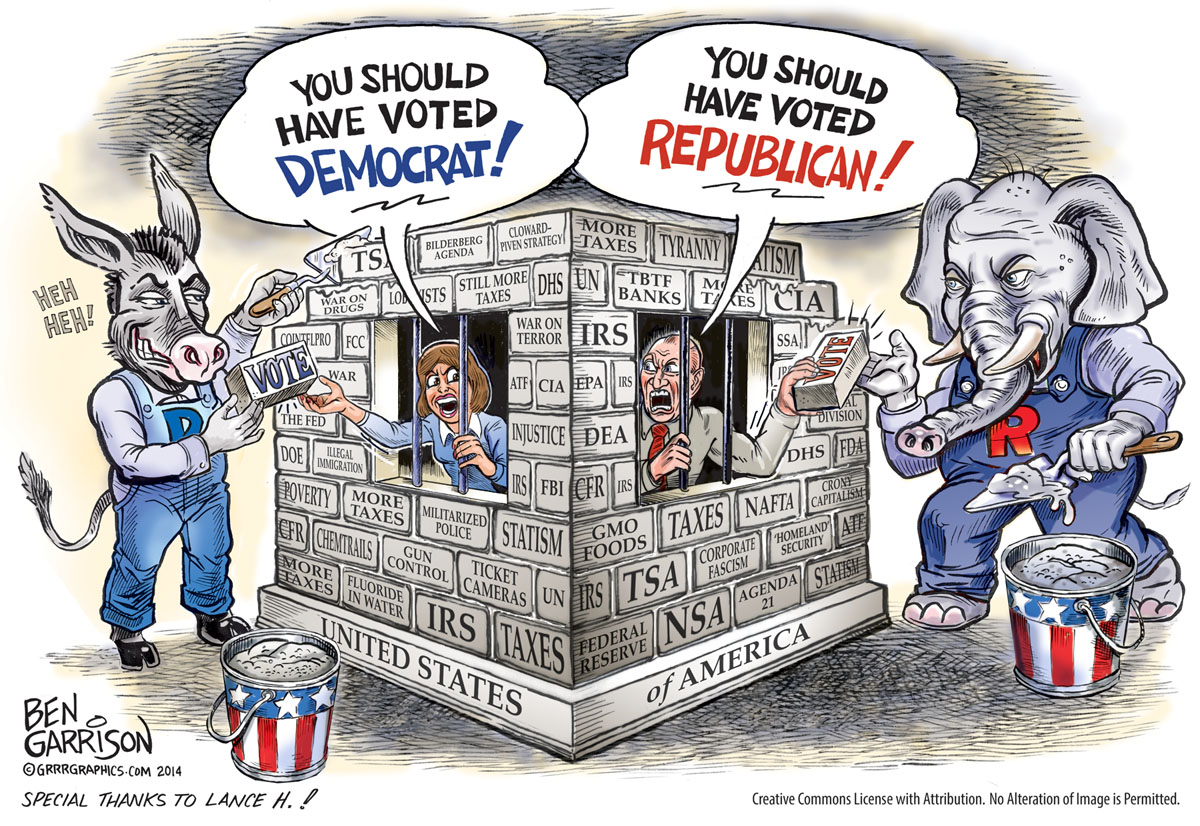
This modern-day political cartoon by Ben Garrison gives commentary on the two-party system in the United States. It uses metaphors and irony in order to make its point that America needs to move away from this system that forces the government to be either Democratic or Republican.

In this cartoon, Garrison uses metaphors in order to simplify the problems that arise with the two party system into a simple situation of people being trapped in a prison cell. The donkey and elephant represent the Democratic and Republican parties, respectively, and the prison cell represents the system trapping its people. Each of the bricks in the cell are either parts of the each party’s platform or something that the party has done to hurt America. The animals have dubious looks as they are purposely cementing the bricks on the man’s and woman’s prison cell. This whole metaphor shows how the people’s vote either goes to the Democrats or the Republicans, and not any other party. It shows how each party has done negative things on either end of the political spectrum to hurt the American people.

This cartoon also uses irony in order to depict how the people are buying into this system and are doing little to break away from the two-party system. In the cartoon, a man and a woman hand a brick that says “vote” to the donkey and the elephant. They are arguing their end of the political spectrum instead of realizing that their vote is trapping them into the problems that have arisen in America. The irony is that they are allowing the system to hurt them and are too busy arguing to even see the bigger picture that both parties can be harmful to America. Additionally, each political party seems to care more about getting the vote then thinking what is best for the country and will not cooperate to make America a progressive nation. This makes viewers realize that the two-party system needs to change.

By using metaphors and irony, Garrison successfully portrays how there needs to be a change to the political structure in America, as the two-party system is hurting the American people.