Sunday, December 18, 2016

TOW #13: Half the world's species failing to cope with global warming as Earth races towards its sixth mass extinction, by Ian Johnston

In this article, Ian Johnston discusses how climate change has had a huge impact on the environment today and how it could cause the world’s sixth mass extinction within the next fifty to one-hundred years. In order to convey his message that we have a small window of ten to twenty years to change our ways before this problem is set in stone, he uses a strong balance between pathos appeal and logos appeal by implementing statistics and writing with a grim tone.

A mass extinction, especially one where 75% of the species we know today are bound to die in a short time period, is a subject that needs to be strongly supported by research in order to be believable. Johnston supports his claims by referring to many studies that have shown the negative effects of climate change on the biosphere. At one point, he say, “A leading evolutionary biologist, Professor John Wiens, found that 47 per cent of nearly 1,000 species had suffered local extinctions linked to climate change.” Studies on the local level are surely the basis of much larger problems since they show that small-scale processes could escalate globally. Nearly 50% of species have experienced local extinctions, which is very significant and could build up to worldwide extinctions. On top of this, “a leading evolutionary biologist” has done a study on this, which helps to establish a trustable source and builds ethos.

While this article does have a strong appeal to logos through the use of statistics, it also has a strong appeal to pathos through the use of a grim tone, which helps push us as humans to take the initiative to stop hurting the environment. He says, “People are going to die and it’s going to be the fault of our country and other big polluters.” We rely on the ecosystem and a mass extinction of 75% of species would mean that it would affect us as well. Many food sources would die out, endangering the human population. This sentence packs a punch by putting the blame on large countries, such as the United States, who are huge players when it comes to pollution. The dark tone of this reverberates throughout the text and helps us to understand that we are in a crisis that we need to fix now.

Johnston’s ability to balance this article’s appeal to the readers’ pathos and logos, helps him to successfully convey his message to the people of the United States to stop polluting the environment. He makes it clear that if we don’t, we could induce the first human-caused mass extinction ever seen on this planet.

(https://i.ytimg.com/vi/ifrHogDujXw/maxresdefault.jpg)

Sunday, December 11, 2016

TOW #12: The Grand Design, by Stephen Hawking


In The Grand Design, Stephen Hawking synthesizes many of the scientific discoveries of the past century, known as quantum physics, which helps to explain our existence and how everything works on an atomic level. This field of science can be confusing as it doesn’t make sense on a level of common sense, however, it is heavily supported by mathematical calculations. Because of this, Stephen Hawking uses a narrative style of writing, using humor and easy-to-understand language, in order to allow people to grasp this dense content. He also has to continually establish his ethos in order to convince people that these theories are quite possibly the rules of everyday life.

On page 7, Stephen Hawking establishes his ethos right away by acknowledging the counterargument that his theories go against the rules of common sense. He says, “Indeed, like many notions in today’s science, it appears to violate common sense. But common sense is based upon everyday experience, not upon the universe as it is revealed through the marvels of technology.” In the first sentence, he appeals to the people that may try to argue against his theories, but then, he refutes this by explaining that one cannot use common sense to understand them. This tells the readers to have an open mind about this book and to trust that this is backed up by scientific and mathematical proof.

Hawking also uses humorous and easy-read-speech in order to give readers a mental break after reading dense content. For example, he says, “If you think it is hard to get humans to follow traffic laws, imagine convincing an asteroid to move along an ellipse.” Hawking uses this as an aid to help explain the belief that Greek philosophers had, which said that the laws of nature happened with human reinforcement. While this might be hard to understand in modern day thinking, Hawking is able to use this in order to help readers grasp the topic in an easy-to-read manner.

Overall, Hawking is successfully able to establish his ethos and help readers to understand dense and confusing topics using his rhetorical skills. In a world where new scientific research is coming up with theories that go against our current understandings of the world, Stephen Hawking is able to ease us into this new matter with The Grand Design.

Stephen Hawking
(http://www.rescuepost.com/.a/6a00d8357f3f2969e201b7c809f135970b-pi)


Sunday, December 4, 2016

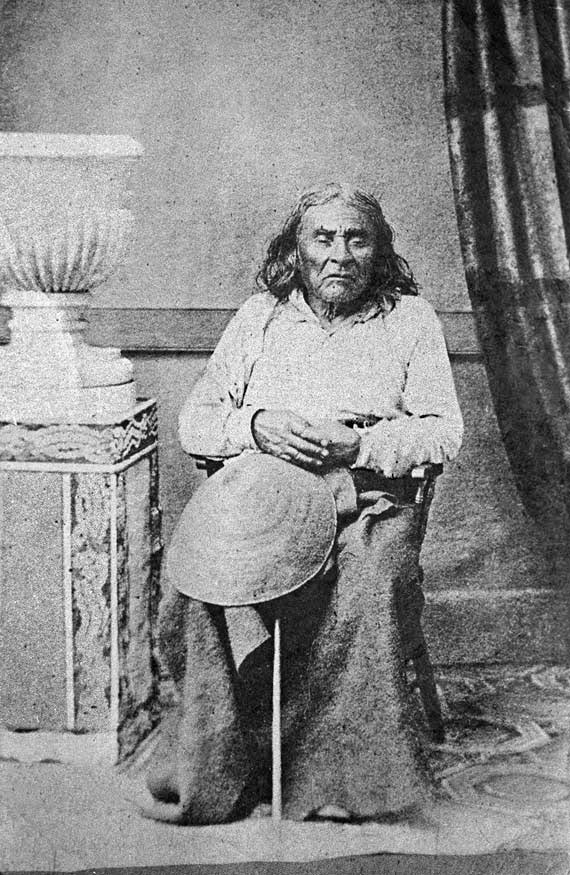
TOW #11: "Oration of 1854" by Chief Seattle


By 1854 in the United States, the “pale-face brothers” of America had taken over the majority of North American land, except for remaining Salish lands in the northwest, where the last independent Native Americans dwelled. This would all change when the American government offered a treaty to purchase the last of this once-sacred land. Chief Seattle, of the most dignified and well-spoken chiefs in the area, gave his oration in response. He used analogies and hostile syntax to create an ominous tone and bitter undertone in order to show that the Native Americans will accept the treaty, but not without keeping their dignity and making white America promise to respect their ancient culture.

Chief Seattle’s strong similes and metaphors help influence and enhance his speech. He says that his people will “prepare to meet [their] doom, as does the wounded doe that hears the approaching footsteps of the hunter.” The doe, a symbol of innocence and wisdom in Native American culture, is a strong-willed animal that would flee from the hunter. Wounded, the doe would watch helplessly as its aggressor took everything it had left, including its life. Chief Seattle uses this to exemplify the relationship between the Native Americans and white Americans. He is victimizing his people, showing that they are losing their way of life, and vilifying white Americans, showing that they are taking everything that the Native’s have. On the surface this creates a hopeless tone towards the Native American people yet a bitter undertone towards the white Americans.

It is not just what Chief Seattle says but the way he says it that creates this effect. He uses hostile syntax to show that they will agree to give up the land but not without objection. He says, “[This treaty] appears generous, for the red man no longer has rights that he need respect.” This is powerful as he is directly saying that white Americans have taken their rights and disrespected them so much to point where this deal “seems generous.” One can detect a little sarcasm in his voice as he probably knows that the American government’s intentions are far from generous. Throughout his oration, Chief Seattle gradually becomes more hostile, ending it by saying, “The White Man will never be alone. Let him be just and deal kindly with my people, for the dead are not altogether powerless.” By saying the white Americans “will never be alone,” he is almost threatening them, saying that his people’s spirits can harm them if needed. These last powerful words leave a tense atmosphere, warning the white Americans to respect the Natives’ culture.


These words speak for the Native Americans in the past, present, and future, as the white Americans have spread across the continent like a forest fire, taking anything in their path and leaving no regard for the Native culture and way of life. This ceding of the final piece of land shows that the Natives no longer want to fight but want to protect all they have left, and Chief Seattle’s dignified way of speaking helped to show this effectively.

Chief Seattle
https://upload.wikimedia.org/wikipedia/commons/6/67/Chief_seattle.jpg