By 1854 in the United States, the “pale-face brothers” of America had taken over the majority of North American land, except for remaining Salish lands in the northwest, where the last independent Native Americans dwelled. This would all change when the American government offered a treaty to purchase the last of this once-sacred land. Chief Seattle, of the most dignified and well-spoken chiefs in the area, gave his oration in response. He used analogies and hostile syntax to create an ominous tone and bitter undertone in order to show that the Native Americans will accept the treaty, but not without keeping their dignity and making white America promise to respect their ancient culture.
Chief Seattle’s strong similes and metaphors help influence and enhance his speech. He says that his people will “prepare to meet [their] doom, as does the wounded doe that hears the approaching footsteps of the hunter.” The doe, a symbol of innocence and wisdom in Native American culture, is a strong-willed animal that would flee from the hunter. Wounded, the doe would watch helplessly as its aggressor took everything it had left, including its life. Chief Seattle uses this to exemplify the relationship between the Native Americans and white Americans. He is victimizing his people, showing that they are losing their way of life, and vilifying white Americans, showing that they are taking everything that the Native’s have. On the surface this creates a hopeless tone towards the Native American people yet a bitter undertone towards the white Americans.
It is not just what Chief Seattle says but the way he says it that creates this effect. He uses hostile syntax to show that they will agree to give up the land but not without objection. He says, “[This treaty] appears generous, for the red man no longer has rights that he need respect.” This is powerful as he is directly saying that white Americans have taken their rights and disrespected them so much to point where this deal “seems generous.” One can detect a little sarcasm in his voice as he probably knows that the American government’s intentions are far from generous. Throughout his oration, Chief Seattle gradually becomes more hostile, ending it by saying, “The White Man will never be alone. Let him be just and deal kindly with my people, for the dead are not altogether powerless.” By saying the white Americans “will never be alone,” he is almost threatening them, saying that his people’s spirits can harm them if needed. These last powerful words leave a tense atmosphere, warning the white Americans to respect the Natives’ culture.
These words speak for the Native Americans in the past, present, and future, as the white Americans have spread across the continent like a forest fire, taking anything in their path and leaving no regard for the Native culture and way of life. This ceding of the final piece of land shows that the Natives no longer want to fight but want to protect all they have left, and Chief Seattle’s dignified way of speaking helped to show this effectively.
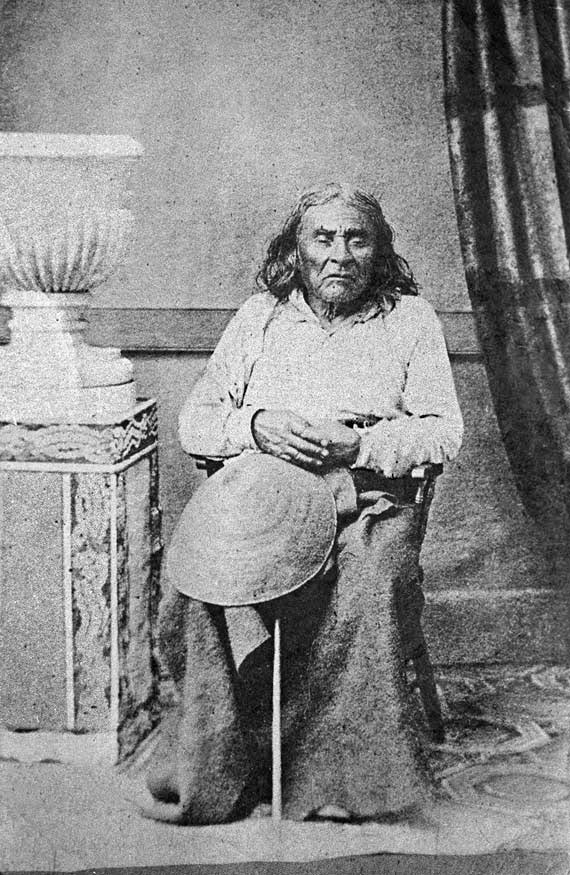 |
| Chief Seattle https://upload.wikimedia.org/wikipedia/commons/6/67/Chief_seattle.jpg |

No comments:
Post a Comment