Sunday, December 18, 2016

TOW #13: Half the world's species failing to cope with global warming as Earth races towards its sixth mass extinction, by Ian Johnston

In this article, Ian Johnston discusses how climate change has had a huge impact on the environment today and how it could cause the world’s sixth mass extinction within the next fifty to one-hundred years. In order to convey his message that we have a small window of ten to twenty years to change our ways before this problem is set in stone, he uses a strong balance between pathos appeal and logos appeal by implementing statistics and writing with a grim tone.

A mass extinction, especially one where 75% of the species we know today are bound to die in a short time period, is a subject that needs to be strongly supported by research in order to be believable. Johnston supports his claims by referring to many studies that have shown the negative effects of climate change on the biosphere. At one point, he say, “A leading evolutionary biologist, Professor John Wiens, found that 47 per cent of nearly 1,000 species had suffered local extinctions linked to climate change.” Studies on the local level are surely the basis of much larger problems since they show that small-scale processes could escalate globally. Nearly 50% of species have experienced local extinctions, which is very significant and could build up to worldwide extinctions. On top of this, “a leading evolutionary biologist” has done a study on this, which helps to establish a trustable source and builds ethos.

While this article does have a strong appeal to logos through the use of statistics, it also has a strong appeal to pathos through the use of a grim tone, which helps push us as humans to take the initiative to stop hurting the environment. He says, “People are going to die and it’s going to be the fault of our country and other big polluters.” We rely on the ecosystem and a mass extinction of 75% of species would mean that it would affect us as well. Many food sources would die out, endangering the human population. This sentence packs a punch by putting the blame on large countries, such as the United States, who are huge players when it comes to pollution. The dark tone of this reverberates throughout the text and helps us to understand that we are in a crisis that we need to fix now.

Johnston’s ability to balance this article’s appeal to the readers’ pathos and logos, helps him to successfully convey his message to the people of the United States to stop polluting the environment. He makes it clear that if we don’t, we could induce the first human-caused mass extinction ever seen on this planet.

(https://i.ytimg.com/vi/ifrHogDujXw/maxresdefault.jpg)

Sunday, December 11, 2016

TOW #12: The Grand Design, by Stephen Hawking


In The Grand Design, Stephen Hawking synthesizes many of the scientific discoveries of the past century, known as quantum physics, which helps to explain our existence and how everything works on an atomic level. This field of science can be confusing as it doesn’t make sense on a level of common sense, however, it is heavily supported by mathematical calculations. Because of this, Stephen Hawking uses a narrative style of writing, using humor and easy-to-understand language, in order to allow people to grasp this dense content. He also has to continually establish his ethos in order to convince people that these theories are quite possibly the rules of everyday life.

On page 7, Stephen Hawking establishes his ethos right away by acknowledging the counterargument that his theories go against the rules of common sense. He says, “Indeed, like many notions in today’s science, it appears to violate common sense. But common sense is based upon everyday experience, not upon the universe as it is revealed through the marvels of technology.” In the first sentence, he appeals to the people that may try to argue against his theories, but then, he refutes this by explaining that one cannot use common sense to understand them. This tells the readers to have an open mind about this book and to trust that this is backed up by scientific and mathematical proof.

Hawking also uses humorous and easy-read-speech in order to give readers a mental break after reading dense content. For example, he says, “If you think it is hard to get humans to follow traffic laws, imagine convincing an asteroid to move along an ellipse.” Hawking uses this as an aid to help explain the belief that Greek philosophers had, which said that the laws of nature happened with human reinforcement. While this might be hard to understand in modern day thinking, Hawking is able to use this in order to help readers grasp the topic in an easy-to-read manner.

Overall, Hawking is successfully able to establish his ethos and help readers to understand dense and confusing topics using his rhetorical skills. In a world where new scientific research is coming up with theories that go against our current understandings of the world, Stephen Hawking is able to ease us into this new matter with The Grand Design.

Stephen Hawking
(http://www.rescuepost.com/.a/6a00d8357f3f2969e201b7c809f135970b-pi)


Sunday, December 4, 2016

TOW #11: "Oration of 1854" by Chief Seattle


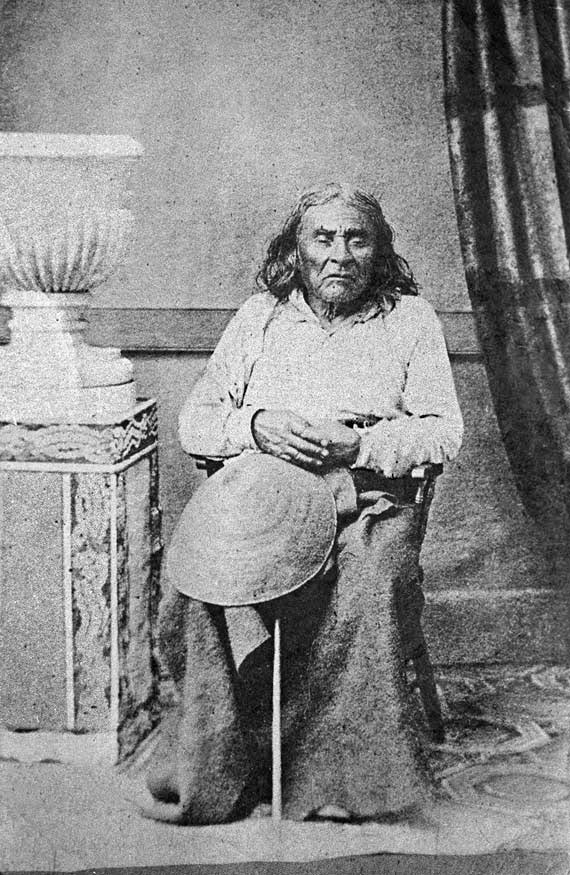
By 1854 in the United States, the “pale-face brothers” of America had taken over the majority of North American land, except for remaining Salish lands in the northwest, where the last independent Native Americans dwelled. This would all change when the American government offered a treaty to purchase the last of this once-sacred land. Chief Seattle, of the most dignified and well-spoken chiefs in the area, gave his oration in response. He used analogies and hostile syntax to create an ominous tone and bitter undertone in order to show that the Native Americans will accept the treaty, but not without keeping their dignity and making white America promise to respect their ancient culture.

Chief Seattle’s strong similes and metaphors help influence and enhance his speech. He says that his people will “prepare to meet [their] doom, as does the wounded doe that hears the approaching footsteps of the hunter.” The doe, a symbol of innocence and wisdom in Native American culture, is a strong-willed animal that would flee from the hunter. Wounded, the doe would watch helplessly as its aggressor took everything it had left, including its life. Chief Seattle uses this to exemplify the relationship between the Native Americans and white Americans. He is victimizing his people, showing that they are losing their way of life, and vilifying white Americans, showing that they are taking everything that the Native’s have. On the surface this creates a hopeless tone towards the Native American people yet a bitter undertone towards the white Americans.

It is not just what Chief Seattle says but the way he says it that creates this effect. He uses hostile syntax to show that they will agree to give up the land but not without objection. He says, “[This treaty] appears generous, for the red man no longer has rights that he need respect.” This is powerful as he is directly saying that white Americans have taken their rights and disrespected them so much to point where this deal “seems generous.” One can detect a little sarcasm in his voice as he probably knows that the American government’s intentions are far from generous. Throughout his oration, Chief Seattle gradually becomes more hostile, ending it by saying, “The White Man will never be alone. Let him be just and deal kindly with my people, for the dead are not altogether powerless.” By saying the white Americans “will never be alone,” he is almost threatening them, saying that his people’s spirits can harm them if needed. These last powerful words leave a tense atmosphere, warning the white Americans to respect the Natives’ culture.


These words speak for the Native Americans in the past, present, and future, as the white Americans have spread across the continent like a forest fire, taking anything in their path and leaving no regard for the Native culture and way of life. This ceding of the final piece of land shows that the Natives no longer want to fight but want to protect all they have left, and Chief Seattle’s dignified way of speaking helped to show this effectively.

Chief Seattle
https://upload.wikimedia.org/wikipedia/commons/6/67/Chief_seattle.jpg

Sunday, November 20, 2016

TOW #10: iDiots- iPhone Parody

iDiots- iPhone Parody, is a stop motion video of robots who are obsessed with a new phone called the “iDiot.” They message each other on it, watch videos of cute cats, buy pointless apps, and share everything on their social media accounts. They never seem to interact with each other unless it’s with their phones. Then, a giant robot, who we find out later is from the same company as the “iDiot,” goes around destroying all the robots’ phones. The robots become depressed, but then they are filled with joy again when the next generation of the “iDiot” is released. They line up to buy it and the cycle starts all over again. The purpose of this is to satirize the consumer market revolving around the iPhone and metaphors, parody, and irony are employed to do this.

The video contains parody in order to make it clear that it is trying to comment on Apple’s consumerism. It uses a logo that closely represents that of Apple; it is a head with a “bite” being taken out of the head, representing someone who is brainless. The distributors of the iDiots also where lanyards clearly just like the Apple Geniuses at Apple Stores. Even, the name “iDiot” looks like “iPhone” while also spelling out “idiot,” saying that we are idiots for being a part of this system.

The video also employs the metaphor of the robot. They are supposed to represent us as consumers, showing that we are brainless robots who just buy, buy, buy without much thought. We buy things that take over our lives, so much to the fact that always feel the need to upgrade to the best version of iPhones. This use of metaphor is a stab at us as consumers, letting technology dictate our lives, and in a way, make us robots of the system.

Lastly, irony is used, when we find out that the huge robot that goes around destroying the iDiots is from the same company that the iDiot is from. One would not expect the company to want to destroy their own phones, but it shows that they are focused on maximizing profits because they know that consumers will just buy new phones. This is mocking both us for being idiots to fall in this trap as well as the companies who will do anything for more money.

Overall this video is meant to satirize on the consumerism Apple created to rip its customers off and the pure idiocracy (though a bit exaggerated) consumers have to be a part of this system.

The Red Consumers
https://www.youtube.com/watch?v=SbmgV7Oyp0w

Wednesday, November 16, 2016

Independent Reading Book for Marking Period 2 (Intro)

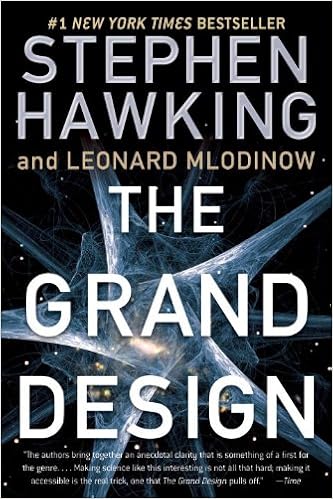
For the second marking period, I will be reading The Grand Design by Stephen Hawking. This book discusses and answers some of the most fundamental questions to the universe and life itself through physics. It also proposes many theories that may seem controversial to traditional ideas, such as the "multiverse" theory. The reason I chose this book because I have always been intrigued by the very basis of space and the existence of Earth.


Book Cover
(https://images-na.ssl-images-amazon.com/images/I/51UfvNQsMgL._SX331_BO1,204,203,200_.jpg)

Sunday, November 13, 2016

TOW #9- "Can Debt Spark a Revolution?" by David Graeber

In “Can Debt Spark a Revolution?” David Graeber discusses how the “top 1%” is controlling American politics and abusing it in order to become wealthier, while the rest of America, who seemingly has little say in the government, is drowning in debt struggling to pay off student loans.  Many felt strongly about this topic, as this article was written around the time of the Wall Street occupation (OWS) where people dubbed the “Bottom 99%” protested against unequal wealth distribution. His intended audience is the bottom 99% and his purpose is to rally them up to fight against what he believes to be a corrupt government. Mainly, he argues for the government to pass a debt forgiveness policy so people in deep debt don’t have to struggle economically anymore. Graeber, a well-known social anthropologist and anarchist activist, establishes ethos early on by claiming he started the “We are the 99%” movement during the OWS.

Throughout “Can Debt Spark a Revolution?,” Graeber uses many rhetorical questions in order to achieve his purpose. In just the title of the article itself, it asks a question that makes people who are in debt think deeply about their debt situation. He asks questions like, “ What kind of promises do we want to make as a society?” and “What could be more obviously insane?” making readers ponder about how how they really want their country structured. These questions, which have a strong appeal to readers’ pathos, are meant to rally up the people who share the same concerns that he does.
Graeber also uses condescending diction and syntax towards the American government and the top 1%  in order to achieve his purpose and make the bottom 99% feel like victims of an unjust system. For example, he calls the US political system “legalized bribery,” making it seem like it is controlled by rich people who are able to leverage their financial situation to advance their place in American politics.  He also refers to the bottom 99% as “refugees of the American debt situation,” contrasting the rich people who can advance themselves in the system to the non-rich people who are stuck in a system of debt.

Overall, I believe that Graeber achieved his purpose to rally the bottom 99% to want change with his strong appeal to readers’ pathos. On the other hand, it is lacking in a strong appeal to logos (which I believe is needed) so some of ideas can come off as radical. Personally, I cannot relate to this problem as I am not an adult struggling in debt from student loans so many of his radical ideas did not resonate with me.

Occupy Wall Street
(http://www.magicalrealism.us/wp-content/uploads/2014/12/o-OCCUPY-WALL-STREET-facebook.jpg)

Sunday, November 6, 2016

TOW #8- Outliers by Malcolm Gladwell

In Malcolm Gladwell’s Outliers, he discusses his theory on the many factors that have led to others’ success. Some of his theories include the “10,000 Hour Rule,” which states that someone cannot master something unless they repeat the process for 10,000 hours (e.g. Bill Gate’s 10,000 hours of coding led to his success in creating Microsoft), and the “Theory of Plane Crashes,” which says that the most effective structure of leadership is where the most assertive people go in the lowest positions and the least assertive go in the highest positions.
When talking about his “Theory of Plane Crashes,” he says, “Planes are safer with the least experienced pilot is flying, because it means the second pilot isn't afraid to speak up.” Just like with this theory, many of his theories can come across as ridiculous and controversial. However, they are well-supported with data and statistics with strong anecdotes, which helps to validate his claims. In effect, this book has little appeal to the readers’ pathos and a strong appeal to the readers’ logos with his strong reasoning. This also helps to build his ethos. His ideas can pertain to the business world, as many of his thoughts align with success in the business world
In addition to a strong appeal to the readers’ logos, he uses ordinary diction, which helps him to achieve his purpose, as his goal is to help show people what it takes to be success, no matter how educated the reader is. His ordinary diction allows anyone to understand his ideas.

Overall, the devices that Gladwell uses in Outliers helps him to build a serious and neutral tone. This helps him to achieve his purpose because if he used an unserious tone, it would ruin his credibility (since Outliers is solely based on reasoning). It is because of this that he is able to clearly get his ideas out and successfully achieve his purpose to teach his readers the factors of success.
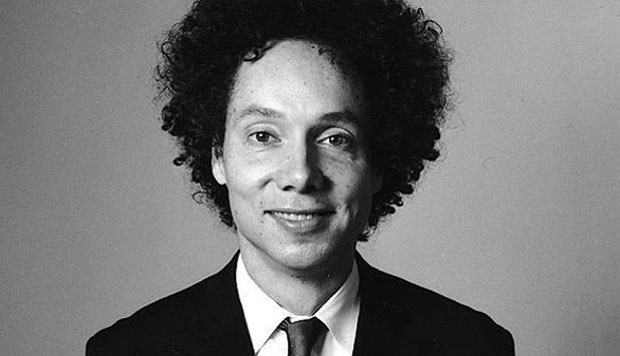
Malcolm Gladwell
(http://www.famousauthors.org/famous-authors/malcolm-gladwell.jpg)

Wednesday, November 2, 2016

TOW #7- Make Mine Freedom

During the Cold War in the 1950s, anti-communism plagued the United States as many believed that communism might take over America. “Make Mine Freedom” is a cartoon that exaggerates the negative aspects of communism and advocates for the benefits of American capitalism. It was made as propaganda to convince the American people to go against the rise in communism and to spread American nationalism.
One rhetorical device that is used is imagery. The American characters in this cartoon are wearing patriotic colors and look like normal people. In contrast, the communist character in this cartoon was wearing all red, the color of communist Soviet Russia, and was made to look very nefarious. This juxtaposition between the “good” American people and the “evil” Soviet communists through imagery biases viewers to have an initial dislike for the communist character.
Another device that is used is anaphora. In one part of the cartoon, the narrator lists the virtues of America, saying, “It’s freedom to work at the job you like, It’s freedom of speech and the right to assemble, freedom of owning your own property...” By repeating the same phrasing throughout a long list of virtues, the narrator shows how America is great. This is quickly juxtaposed when the characters get a taste of what living in communism looks like. “The State” is depicted as oppressors of its people’s liberties. This is a strong appeal to the viewer’s pathos, as it plays on their satisfaction of living in a capitalist system and their fear of living in a communist system. Then, the cartoon shortly shifts to having an appeal to the logos, giving statistics on how America is thriving.
At the very end of the cartoon, the characters drive out the communist character while patriotic music is playing in the background in order to build American nationalism and convince viewers that communism goes against American values.
Overall, this video has a strong appeal to the viewer’s pathos and a little logos (which is common in propaganda) to successfully convince them that communism is a threat to the American way of life.

https://aos.iacpublishinglabs.com/question/aq/1400px-788px/what-are-the-differences-between-communism-and-capitalism_28c1ca4d-ab08-4532-ae00-dfabc198ec6d.jpg?domain=cx.aos.ask.com

Sunday, October 23, 2016

TOW #6: "Schizophrenic. Killer. My Cousin." by Mac McClellan

In “Schizophrenic. Killer. My Cousin,” the author, Mac McClellan, advocates for the increase in funding for mental health in America because he believes that it will decrease violence, save money, save a “misunderstood population.” At a time in this country where gun violence is high and more people with mental health issues are ending up on the streets and in jail, he believes that this funding is important. McClellan, who’s directly affected by family with mental health issues, gains credibility

McClellan begins with a heavy appeal to the readers’ pathos by giving anecdotes about his cousin, Houston, who, once a normal child, became schizophrenic and gruesomely murdered his father. Before, the doctors diagnosed Houston with the wrong condition, gave him the wrong drugs, and said if that didn’t work, to call the police. This chilling story is tied to many others, such as the Aurora movie theater and Sandy Hook shootings. By appealing to unsettling emotions, McClellan is able to show that there is a need for an improvement in the healthcare system of treating mental health.
McClellan then shifts to a heavy appeal to the readers’ logos by giving statistics and strong reason. He says, “They got Medicare and Medicaid, but [policymakers] didn't think about food. And haircuts. Clothes. How to find a place to live.” He is showing that there is a lack of resources being provided to mental health patients, which digs them into a deeper hole, and causes more problems, such as violence (eventually landing them in jail) and homelessness. McClellan also says, “Two to three thousand dollars in treatment saves $50,000 in jail,” which clearly shows that it makes more economic sense to spend money on prevention of mental health violence than punishing untreated mental health patients. By showing that there is reason to increase the mental health budget in America, McClellan effectively builds up his purpose.

McClellan finally shifts back to an appeal on the readers’ pathos by returning to Houston’s story. He explains that Houston is now being properly treated and is looking forwards to be a fully functioning member of society. Houston says, “he hopes he never goes to that place again, where he hears voices that say his parents are against him.” McClellan emphasizes that this could be the outcome for mental health patients across the globe if the government gives them more resources. This increases the readers’ sympathy for these people and helps him to achieve his purpose. 

Overall, McClellan effectively is able to convey his purpose due to a balance of appeals to logos and pathos. This text even is strong enough to convince people who are against mental health spending.

Schizophrenia is one of the many types of mental health issues
(http://www.newhealthadvisor.com/images/1HT00454/schizophrenia.jpeg)


Sunday, October 16, 2016

TOW #5: “There's More to Life Than Being Happy,” by Emily Esfahani Smith

In this text, Smith distinguishes the difference between being happy and having meaning in life. She expresses that while happiness does have its benefits in here and now, sacrificing it for finding meaning and purpose is much more beneficial in the long run. By doing this, people can be healthier in life and more resilient to the challenges that they might face. Smith is writing this now because she believes that the idea of sacrificing happiness for meaning “seems to be at odds with our culture, which is more interested in the pursuit of individual happiness than in the search for meaning.” While she is just a journalist and not a scientist, she uses statistics and anecdotes in order to achieve her purpose and establish credibility throughout the text.

Smith’s use of statistics and data gives this text a strong appeal to logos and helps to show that research supports her claim. She says, “Psychological scientists asked nearly 400 Americans aged 18 to 78 whether they thought their lives were meaningful and/or happy...Leading a happy life, the psychologists found, is associated with being a ‘taker’ while leading a meaningful life corresponds with being a ‘giver.’” She then goes to on to explain that people who pursue happiness end up living a shallow, selfish life, while people who pursue meaning end up living deep, emotionally rewarding life. These statistics help to show that her claims have validity.

Smith also uses anecdotes of Viktor Frankl’s, a Jewish psychologist who lived through the Holocaust, life. She discusses how he had a chance to escape Hitler’s genocide, but he gave up his safety and personal opportunities in order to stay with his parents. By committing this selfless act, he was able to find meaning in his life and become more resilient throughout the Holocaust. Smith also tells the story of how Frankl helped two suicidal people find meaning in their life while they were in a concentration camp and helped them live through their self-destructive thoughts. By including anecdotes, Smith shows that there is support to her reasoning in the real world past just the numbers and data. Overall, I believe that Smith was semi-successful in advocating for the pursuit of meaning over that of happiness. She was a little heavy on the use of statistics, which made this article redundant. This text could be improved if she had focused more on the anecdotes of Viktor Frankl’s life, as it would give the text more depth.

Viktor Frankl, psychologist and survivor of the Holocaust
(http://www.charterforcompassion.org/images/menus/ReligionSpiritualityInterfaith/frankl3.jpg)

Sunday, October 9, 2016

TOW #4- IRB: Outliers by Malcolm Gladwell

In Outliers, Malcolm Gladwell, a journalist and author, discusses and theorizes many of the factors that contribute to high levels of success. This is his one out of five books, most of which are national bestsellers, that he has written. Gladwell believes that people’s beliefs on what success comes from are not accurate, which pushed him to write this book. Outliers pushes the readers to disregard their former beliefs of what success comes from, as this is necessary to understand Gladwell’s unorthodox beliefs on what causes success. Because of this, Outliers is aimed towards people who are or want to become leaders and successful people.
Gladwell uses many rhetorical devices in order to achieve his purpose to explain the origins of prosperity. Since his theories tend to be more unconventional than those of other people, these devices are essential in order to support his arguments and make them more believable. One of the major devices that he uses is anecdotes. For example, in Chapter 1, he explains the “Matthew Effect,” which is the idea that success favors people who were born with an advantage. These people are given more opportunities to become successful. He ties this theory to sports and education by explaining that children who were born at the beginning of an age cutoff for a sport or grade have the special advantage of getting a few more months to develop than the other kids in that group. They would stand out as more talented and would be chosen to be part of a gifted program in school or part of the elite level in a sport. He uses stories of kids who had this advantage and grew up to be more successful. This allows the reader to see that there are many cases that support his reasoning.
Gladwell also uses data in order to support his arguments. He gives many charts of rosters that show the birthdays of successful sports teams and shows that the majority of the team members have birthdays at the beginning of the age cutoff (e.g. the cutoff for Canadian hockey is January 1 and most of the players of a team that won the national hockey championship a few years earlier had birthdays between January and March). This data that he provides show that statistics support his argument, giving it validity. Overall, his rhetorical tactics are heavy in an appeal to logos since reason an essential part to supporting his argument.
Overall, I believe that Gladwell’s use of rhetorical devices effectively support his untraditional theories, and builds his purpose to explain the true factors of success.

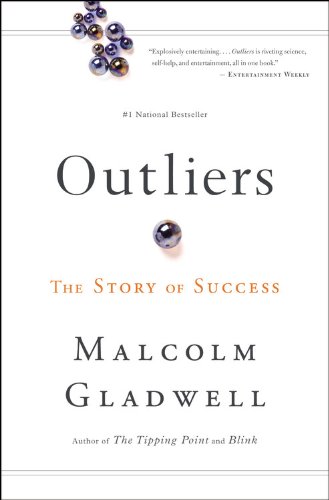
Outliers Book Cover
(https://images-na.ssl-images-amazon.com/images/I/41h5QL0vVEL.jpg)

Sunday, September 25, 2016

TOW #3- Superman and Me by Sherman Alexie


Sherman Alexie wrote, “Superman and Me,” to show how he defied Native American stereotypes by excelling in school and becoming a writer, and later helping other Native American students to do the same. This was written during a time where Native Americans struggled financially due to these stereotypes. The purpose give people hope to defy expectations to make their lives better. As a Native American who went against America’s expectations for him to be inferior to others, he establishes his credibility.Sherman uses juxtaposition, metaphors, and anaphoras in order to advocate his purpose.

His use of juxtaposition helps the readers to understand the extreme differences between Native American interaction with their own people and that with other Americans. He says, “[Native Americans] struggled with basic reading in school but could remember how to sing a few dozen powwow songs. They were monosyllabic in front of their non-Indian teachers but could tell complicated stories and jokes at the dinner table” (Sherman, para. 6). Sherman shows how Native Americans struggle within the culture of the United States, but thrive within their own culture with their own people. This shows how the average American Indian would fall to the stereotypes against them, and sets to stage for Sherman to break this cultural barrier.

He also uses metaphors in order to show this, including the motif Superman. Sherman learned how to read from Superman comic books. This character is one who, against all odds, does the impossible to save the world. In paragraph four, he describes how he pretended to be able to read by describing what was going on in the comic picture, such as when “Superman is breaking down the door.” In a way, Superman is metaphorical for Sherman’s life, as he is “breaking down the door” of society by excelling in his studies a Native American.

Lastly, Sherman uses anaphoras in order to portray his goal to break the negative societal expectations towards Native Americans. He says, “I was smart. I was arrogant. I was lucky...I was trying to save my life” (para. 7), and later concludes with, “I am smart. I am arrogant. I am lucky. I am trying to save our lives” (para. 8). By repeating the same sentence structure over and over, he stresses to the readers that he was driven to get himself out the bad financial situations in Native American reservations and is driven today to help his people do the same.

It is through these three rhetorical devices that Sherman is able to effectively accomplish his purpose.

https://i.ytimg.com/vi/-stkMRVkCIU/maxresdefault.jpg

Sunday, September 18, 2016

TOW #2: Breathometer Shark Tank Pitch- by Charles Michael Yim

This is a video of Charles Michael Yim’s Shark Tank pitch of his new product: the Breathometer. Yim describes the problem that after a night out with friends, many can find themselves having too much to drink. He asks, “And the most important question is: are you safe to drive?” The rhetorical question that he poses can resonate with many adults, including the investor board listening to his pitch, as driving after a night out with friends can can pose many safety issues. He describes this question as “the most important question” and uses a pressing tone in order to create his desired effect to make the issue of drunk driving stick in the minds of the audience. He continues and talks about a current solution to this problem. He asks, “Who would want to carry one of these bulky, old breathalyzers around?” This is another rhetorical question, which makes the audience question why someone would want this current solution. He describes the current breathalyzers as “bulky” and “old,” which helps create the effect that they are undesirable. He finally presents his solution, the Breathometer, “the world’s first smartphone breathalyzer.” He compares his innovative, modern product with the old fashioned breathalyzer. He also compares their sizes and describes his product as, “so small, it can fit in your pocket.” Through this juxtaposition between his solution to preventing drunk driving and current solutions, he is able to show that his product is superior.
Throughout the whole pitch, Yim maintains a serious, calm, and confident tone of voice, which helps to achieve his purpose: to receive an investment from the investors that will help him scale is venture. The people in the investor panel are experienced, self-made people in the business world. Yim establishes his credibility by giving a convincing pitch and being able to answer the tough questions that the investors throw at him (he even knows the numbers and stats of his business by heart). In the end, Yim was able to secure $1 million from the investors in return for thirty-percent of his company.

With thousands of people being killed from drunk driving accidents annually, Yim truly believes in his cause to offer an easy and simple way to solve this problem. Overall, through his strong pitch, including the use of rhetorical questions, juxtaposition, and a confident tone, he is able to achieve success.

https://www.youtube.com/watch?v=rx8I703K2RI

Sunday, September 11, 2016

Corn-pone Opinions by Mark Twain


Mark Twain is one of the most well renowned writers in American history. He was able to gain wide acclaim from the people of his time and even of today with his literature, including The Adventures of Tom Sawyer and the Adventures of Huckleberry Finn. Today, he is known as “The Father of American Literature.”

“Corn-pone Opinions” is about the human need of others’ approval in order to have self-approval. He claims that people never come up with their own unique ideas or opinions, and instead, they conform to the ideas and opinions of others in order to fit in. This piece was written in 1901, a time when racism was wide-spread in the south. Growing up in Missouri and living through slavery, Twain was able to see first-hand the terrible things that happened to African-American people. The reason these ideas were able to spread and be maintained was because of this idea of conforming to public opinion. Based on this theory, it would be rare that people would step up against slavery and racism in the south since most people would just accept the ideals of a society at that time. Twain is aiming this passage to the American people, especially those of the south, who supported slavery, racism, and other ideals that hurt people but are caused by others conforming to them. His purpose is to “expose” human nature, which prevents people from coming up with unique, independent ideas, and to express that it is important to come up with their own.

To achieve this purpose, Twain uses many tools and devices. Firstly, he opens up the passage by using an anecdote from his childhood that showcases his rebellious, non-conforming nature. The anecdote depicted when he used to watch an African American male give speeches about conformity, regarding him as his friend. Twain says, “I had a friend whose society was very dear to me because I was forbidden by my mother to partake of it” (1). Instead of conforming to the ideals of racism, Twain created his own viewpoints. This sentence almost seems paradoxical since it does not make sense to have a forbidden friend. This also introduces humor into the passage.

Another device that Twain uses is repetition and anaphora. He says things such as, “We know why Catholics are Catholics; why Presbyterians are Presbyterians; Baptists are Baptists…” (4) and “The think with their party, not independently; they read its literature, but not that of the other side; they arrive at convictions, but they are drawn from a partial view…” (5). This use of repetition and anaphora helps to drill the idea of conforming into the readers’ minds and allows them to understand the central ideas better.

Overall, I believe that Twain expresses his ideas clearly and effectively since he is able to give many examples to support his claim that it is human nature to conform to public opinion and not have independent ideas.

Conforming to The Styles of Others
(http://www.heathwoodpress.com/wp-content/uploads/2014/01/Conformity2-612x520.jpg)


Wednesday, September 7, 2016

Independent Reading Book for Marking Period 1 (Intro)

This marking period, I will be reading Outliers: The Story of Success by Malcolm Gladwell. This book discusses the factors that lead to high levels of success. I chose this because I believe that this book can teach me some skills and qualities that I might need to become a successful entrepreneur and run a successful company, something that I aspire to do.


Outliers Book Cover

Sunday, August 28, 2016

"The Future is Now" by Katherine Anne Porter


Katherine Anne Porter was an American journalist who is well known for her short stories. Having lived through two world wars and immersed in the fear of the Cold War, she comments on the death and destruction she had witnessed and might witness in the future.

“The Future is Now” begins with an anecdote of her reading an article on how to survive an atomic bomb. She looks out her window, observing the city down below, and comes to the realization that people are living too much in the future, fearing death via bomb, when they should be living in the present, while there is still peace. She parallels this concept to mankind as a whole. Porter uses mankind as an apostrophe throughout the passage to convey this point, such as her statement, “Man has obviously outreached himself, to the point where he cannot understand his own science or control his own inventions” (196). She believes that mankind is living too much in the future, trying to advance its technology, but we as a society are not stepping back and realizing that the technology we are creating is killing millions of people. Mankind’s intellectual curiosity has led it down a path of death and destruction.

On the contrary,  Porter believes that it is this curiosity that helped us evolve into civilized people in advanced societies. She asks the rhetorical question, “What would you have advised instead? That the human race should have gone on sitting in caves gnawing raw meat and beating each other over the head with the bones?” (198). Thus, a paradox is created where we need our drive to improve the human civilization, but we also use this drive for mass destruction. Porter addresses the people of America and the people of the western world, the two main culprits of this crime, that we should use our appetite for improvement solely for good to advance society and not destroy it.


I believe that by using a vibrant mood that is full of promise, Porter has accomplished her purpose to put a stop to death in the world.

Technological Advance for the Great Good
(http://bigthink.com/ideafeed/how-close-are-we-to-simulating-the-human-brain)

"How It Feels to Be Colored Me" by Zora Neale Hurston


Zora Neale Hurston is an African-American novelist. Born in the south in 1891, she experienced discrimination towards “colored” people first hand. These personal experiences establish her credibility in this passage.

“How It Feels to Be Colored Me” is about Hurston’s experiences that helped to shape her outlook on life and find her true identity. After being sent to boarding school at the age of thirteen, she truly felt racism in America, but instead of letting that negatively affect her, she used others’ hatred to boost her pride for being an African-American woman.

Written in 1928, this passage is directed towards other African American people during this time. She is trying to tell them not to be beat down by discrimination, but to have pride in their own race. She makes many allusions to African tribal culture, mentioning things like body paint and assegais, which strengthens her purpose of bringing out African pride.

One of the most powerful ways that Hurston communicates her purpose is through metaphors. For example, she says, “No, I do not weep at the world– I am too busy sharpening my oyster knife” (115). Metaphors like this show her African pride and tell others not to let discrimination knock them down. She also uses metaphors to describe her self-identity. She concludes the passage saying, “I feel like a brown bag of miscellany propped against a wall...in company with other bags, white, red and yellow...[They] all might be dumped in a single heap and the bags refilled without altering the content of any greatly” (117). This conclusion shows her belief that she is no different than other people, regardless of race.


Lastly, Hurston’s use of colloquialisms, such as when she says, “I would probably ‘go a piece of the way’ with them, as we say in farthest Florida” (114), gives this passage a conversational tone that is easy to understand. Her purpose is conveyed clearly, which helps to her passage appeal to people’s pathos. Because of this, I believe that Hurston was successful in accomplishing her purpose to instill pride within African Americans during this time.

African-American Pride Is Greater than Racism
(http://www.blackhistoryflag.com/)

"The Moral Equivalent of War" by William James


Dubbed as the “Father of American Psychology” and one of the main influencers in the pragmatist movement (a philosophy based on practical application), James is a well respected theorist. His theories influenced thousands across the country, which gives him ethos in this field.

In “The Moral Equivalent of War,” William James discusses the balance between war and pacifism. Being a pacifist himself, he believes that a world without war against one another would be the ideal society. On the contrary, he does not believe in the total eradication of war as there are many benefits that help to create productive society. He proposes a utopian society where we wage war against nature instead of one another. This way, our society would reap the benefits of war without the fatalities.

This passage was relevant around the early 1900s when it was published because of growing tensions across the ocean with Japan’s expanding empire and with Europe’s pre-WWI state. James’s plea for a peaceful society was directed towards the American people as war seemed like an inevitable event among these growing tensions.

One rhetorical device that stands out in this passage is James’s use of pathos. He says, “War is, in short, a permanent human obligation” (49). The use of words like “permanent” and “obligation” draw powerful emotion such as fear and urgency from the audience. Sentences like this are used throughout the entirety of the passage. Another example is when he says, “We should get toughness without callousness, authority with as little criminal cruelty as possible...because the duty... threatens not to degrade the whole remainder of one’s life” (54). The use of these powerful sentences also sets a pressing mood, which makes his purpose seem more real and in-the-moment.


All in all, I believe that James conveys his ideas in a clear way that the audience can easily understand, but I do not think that he successfully convinces them, as he romanticizes the idea of war. He makes war seem like a great deed to humanity, when in reality, it is full of bloodshed and violence.

A War Against Nature and Not Against Each Other
(http://voiceseducation.org/content/make-war-against-war)